15 Fine Motor Skill Activities for Toddlers
During the toddler years, children grow and develop at an incredible pace. From learning to walk and climb to exploring the world around them, every day brings something new. Alongside these big milestones, developing fine motor skills is just as important.
At My Ohana, we support children through every stage of their development, encouraging hands-on, play-based learning that helps little ones build essential life skills in a nurturing environment.
These smaller, more precise movements help toddlers build the coordination they need for everyday tasks like feeding themselves, getting dressed, and eventually writing.
The good news? You don’t need expensive toys or complicated setups. Many of the best fine motor activities for toddlers can be done at home, using simple, everyday items.
Jump to:
What Are Fine Motor Skills?
Fine motor skills involve the coordination of small muscles in the hands, fingers, and wrists, often working alongside the eyes.
While gross motor skills cover larger movements like walking or jumping, fine motor skills are all about control and precision – think gripping a crayon, turning a page, or picking up small objects.
Developing these skills early helps build the foundation for:
Writing and drawing
Self-care tasks like dressing and feeding
Hand-eye coordination
Independence and confidence
Why Are Fine Motor Activities Important?
Encouraging fine motor activities from a young age supports your toddler’s overall development.
Regular practice helps to:
Strengthen hand and finger muscles
Improve coordination and control
Build concentration and patience
Support school readiness skills
And most importantly - these activities can (and should!) feel like play.

15 Fun Fine Motor Skill Activities for Toddlers
Here are some easy, engaging ideas you can try at home or incorporate into your daily routine.
1. Drawing, Colouring and Mark Making
Simple activities like scribbling with crayons or drawing shapes help develop grip and control. Try chunky crayons or washable markers for little hands. These early mark-making skills also support communication and learning - you can explore more ideas in our literacy activities for toddlers blog.
2. Playdough and Sensory Dough
Squishing, rolling, pinching, and shaping playdough is brilliant for strengthening tiny hand muscles while encouraging creativity.
3. Building Blocks
Stacking blocks helps develop hand-eye coordination and spatial awareness. Start with larger blocks before introducing smaller ones as your child grows.
4. Threading and Posting Activities
Threading beads onto string or posting objects into containers supports precision and coordination. For younger toddlers, use larger items like pasta or wooden shapes.
5. Peeling Fruit
Simple tasks like peeling a banana or a clementine are fantastic for practising hand strength and coordination (with supervision).
Looking for More Ways to Support Your Toddler?
At My Ohana, we incorporate activities like these into everyday play to help children build confidence and key developmental skills.
Discover how we support early learning at your nearest My Ohana nursery.
6. Using Pegs or Clips
Clothes pegs are great for building finger strength. Let your toddler clip artwork onto a line or help hang washing.
7. Sticker Play
Peeling and sticking stickers is a fun way to develop pincer grip (using thumb and forefinger).
8. Tearing and Scrunching Paper
Encourage your toddler to tear paper into pieces or scrunch it into balls – a simple but effective way to strengthen hands.
9. Simple Puzzles
Chunky wooden puzzles help improve problem-solving skills, coordination, and grip.
10. Baking Together
Mixing, pouring, rolling dough, and cutting shapes all involve different hand movements that build strength and control - plus it’s a lovely bonding activity.
11. Practising Dressing Skills
Encourage your toddler to pull on socks, fasten Velcro shoes, or attempt big buttons. These everyday tasks are great for independence too.
12. Water Play and Pouring
Using cups, jugs, or bottles to pour water helps develop control and coordination (and keeps little ones entertained for ages!).
13. Using Tongs or Scoops
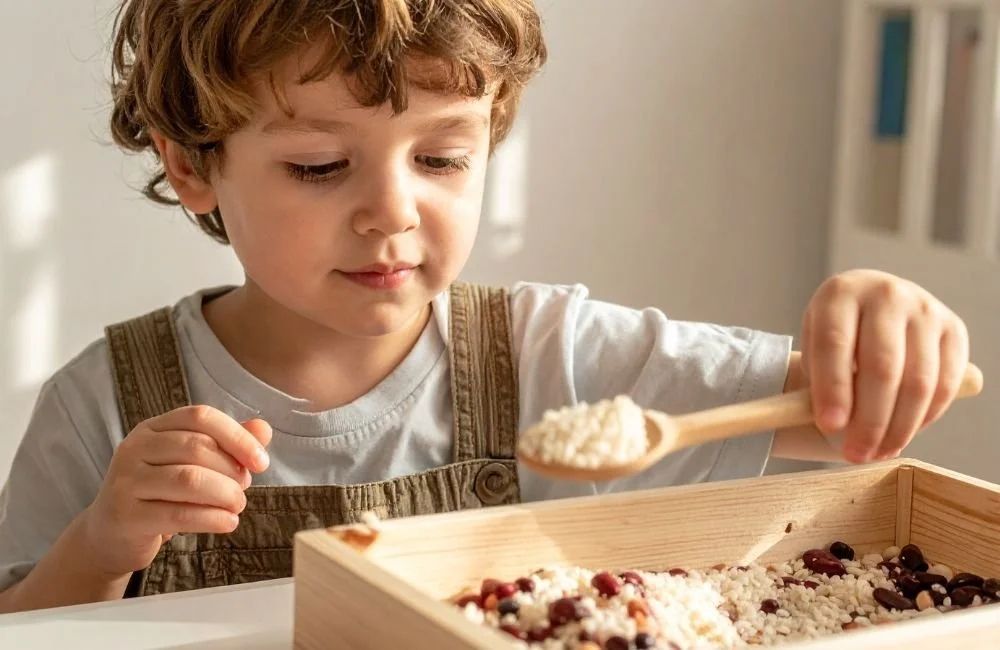
Picking up small items with tongs or a spoon is a brilliant way to strengthen grip and improve precision.
14. Sand Play
Scooping, digging, and building in sand helps develop coordination while offering valuable sensory play. Outdoor activities like this also support wider development - read more about the benefits of outdoor play.
15. Helping with Household Tasks
Simple jobs like loading the washing machine, wiping surfaces, or using a handheld brush can all support fine motor development - and we all know toddlers love to help!
Tips for Supporting Your Toddler
Every child develops at their own pace, so keep activities fun and pressure-free.
Always supervise activities with small objects
Start simple and build up gradually
Follow your child’s interests
Keep sessions short and engaging
Celebrate effort, not perfection
Even small, everyday actions can make a big difference over time.
Support Your Child’s Development with My Ohana
At My Ohana, we know how important those early years are for building confidence, independence, and essential life skills. Through carefully planned activities and play-based learning, we support children in developing their fine motor skills every single day.
If you’d like to see how we create a nurturing, inspiring environment for your little one, we’d love to welcome you for a visit.
Book a tour at your nearest My Ohana nursery today and discover how we can support your child’s learning and development journey.